English
 Arabic
 French
 Spanish
 Portuguese
 Deutsch
 Turkish
 Dutch
Dutch
 Italiano
 Russian
 Romaian
 Portuguese (Brazil)
 Greek
Greek

The Underrated Power of Pink Palm Puff and Stussy Hoodie
Fitness |
2025-03-04 06:46:02
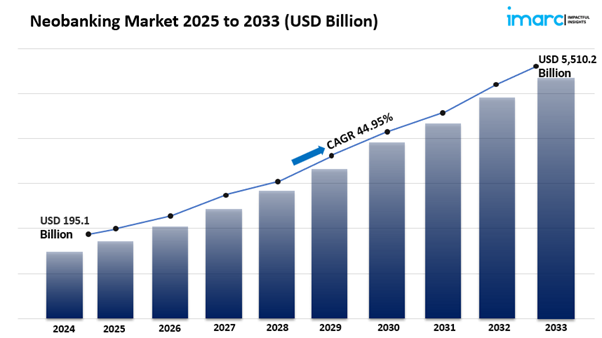
IMARC Group, a leading market research company, has recently released a report titled “Neobanking Market Report by Account Type (Business Account, Savings Account), Application (Enterprises, Personal, and Others), and Region 2025-2033”. The study provides a detailed analysis of the industry, including the neobanking market share, trends, size, and industry trends forecast. The report also includes competitor and regional analysis and highlights the latest advancements in the market.
The global neobanking market size reached USD 195.1 Billion in 2024. Looking forward, IMARC Group expects the market to reach USD 5,510.2 Billion by 2033, exhibiting a growth rate (CAGR) of 44.95% during 2025-2033.
Request to Get the Sample Report:
https://www.imarcgroup.com/neobanking-market/requestsample
The global neobanking market is experiencing robust growth, driven by evolving consumer preferences and rapid technological advancements. As of 2023, digital banking continues to reshape the financial services landscape, with more individuals turning to neobanks for their affordability, innovation, and customer-centric services.
Heading into 2024, regulatory developments are expected to further propel the market forward. The rise of open banking is increasing competition and expanding consumer choice by enabling data-sharing between financial institutions. Additionally, the growing emphasis on financial inclusion and education is fueling demand for neobanks, which are well-positioned to serve underserved populations with accessible, user-friendly financial tools. This ongoing transformation highlights the importance of innovation, security, and inclusivity in the banking sector. Companies that deliver secure, intuitive, and educational experiences are set to lead the market.
The increasing demand for digital-first banking experiences is a key driver of the neobanking market. Consumers—especially younger, tech-savvy individuals—are embracing mobile and online platforms for managing their finances. This shift is disrupting traditional banking models, as neobanks offer more agile, intuitive, and cost-effective solutions.
By 2024, the demand for seamless, personalized digital banking is expected to accelerate. Neobanks are attracting customers with features such as instant account opening, real-time notifications, and tailored financial tools. These offerings significantly enhance the overall banking experience compared to conventional institutions. Additionally, neobanks typically operate with lower overhead costs, allowing them to offer competitive fees and better interest rates. This affordability appeals to digitally native users who prioritize convenience and accessibility. As neobanks continue refining their services, they are poised to capture a growing share of the market and challenge legacy banks to innovate.
Favorable regulatory changes and the expansion of open banking are accelerating growth in the neobanking sector. Policymakers increasingly recognize the need to modernize financial services and foster competition. Regulatory frameworks are being designed to support innovation while safeguarding consumer interests.
By 2024, open banking initiatives will enable neobanks to securely access customer data from traditional banks—provided user consent is given. This will allow neobanks to offer more personalized and responsive services. Additionally, regulatory bodies are emphasizing transparency, data privacy, and financial security. These protections help establish trust between consumers and digital-only banks, encouraging broader adoption. Overall, the combination of open banking and regulatory backing is not only driving growth for neobanks but also fostering a more dynamic and collaborative financial ecosystem.
The push toward financial literacy and inclusion is another critical factor fueling the rise of neobanks. Many individuals—especially in underserved or unbanked segments—lack access to traditional financial services. Neobanks are addressing this gap by offering accessible, tech-driven banking platforms designed to simplify money management.
By 2024, demand is expected to increase for neobanks that prioritize education and inclusivity. Many now include tools such as automatic budgeting, savings goals, credit-building programs, and interactive financial education resources. These features help users improve financial decision-making and promote long-term financial wellness. Additionally, neobanks often offer more lenient eligibility criteria for accounts and credit services, enabling access for those with limited or no credit history. As these inclusive solutions gain traction, neobanks are expanding their customer base and contributing to broader economic empowerment.
As more people recognize these benefits, the neobanking market will continue to grow, driven by its focus on inclusivity and education.
Neobanking Market Report Segmentation:
By Account Type:
Business account accounted for the largest market share due to the growing demand from small and medium-sized enterprises for digital banking solutions that offer better financial management tools and lower fees compared to traditional banks.
By Application:
Enterprises represented the largest segment as large organizations seek comprehensive and scalable financial solutions that can integrate seamlessly with their existing systems and support global operations.
Regional Insights:
Europe’s dominance in the neobanking market is attributed to the advanced technological infrastructure, supportive regulatory environment, and high adoption rate of digital banking services among consumers and businesses.
Competitive Landscape with Key Players:
The competitive landscape of the digital payment market size has been studied in the report with the detailed profiles of the key players operating in the market.
Some of These Key Players Include:
Ask Analyst for Customized Report:
https://www.imarcgroup.com/request?type=report&id=3488&flag=C
Key Highlights of the Report:
If you need specific information that is not currently within the scope of the report, we will provide it to you as a part of the customization.
About Us
IMARC Group is a leading market research company that offers management strategy and market research worldwide. We partner with clients in all sectors and regions to identify their highest-value opportunities, address their most critical challenges, and transform their businesses.
IMARC’s information products include major market, scientific, economic and technological developments for business leaders in pharmaceutical, industrial, and high technology organizations. Market forecasts and industry analysis for biotechnology, advanced materials, pharmaceuticals, food and beverage, travel and tourism, nanotechnology and novel processing methods are at the top of the company’s expertise.
Contact Us:
IMARC Group
134 N 4th St
Brooklyn, NY 11249, USA
Website: imarcgroup.com
Email: sales@imarcgroup.com
Americas: +1-631-791-1145 | Europe & Africa: +44-753-713-2163 | Asia: +91-120-433-0800