English
 Arabic
 French
 Spanish
 Portuguese
 Deutsch
 Turkish
 Dutch
Dutch
 Italiano
 Russian
 Romaian
 Portuguese (Brazil)
 Greek
Greek

3D Integrated Circuits for Computing Market Outlook Research Report, Trends, Growth and Scope By Forecast 2025 - 2032
Other |
2025-06-12 14:15:04
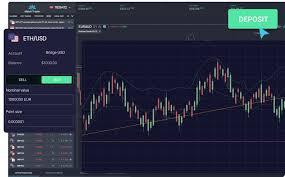
The journey to becoming a funded trader begins with preparation, discipline, and a strong understanding of the evaluation processes used by proprietary trading firms. One of the most widely adopted methods for evaluating traders today is the 2 Step Challenge. This challenge is designed to test not only trading skill but also a trader’s ability to follow rules and manage risk responsibly. For those looking to get funded by the best prop firms, mastering each phase of this challenge is essential.
Understanding the 2 Step Challenge structure and its purpose helps traders prepare mentally and technically for what lies ahead. It also gives insight into what prop firms value the most: consistency, risk management, and long-term potential over short-term results. This article explores each phase of the challenge, how it aligns with the goals of professional firms, and what traders should focus on to pass with confidence.
The 2 Step Challenge is a structured evaluation method used by many proprietary trading programs. It consists of two distinct phases, each designed to assess a different aspect of a trader’s performance. While the format may vary slightly among organizations, the overall concept remains consistent. In the first step, traders are given a simulated account and must meet specific profit targets while adhering to strict rules. The second step focuses on confirming that the trader can replicate their performance in a more realistic, lower-pressure environment before they’re given access to a funded account.
Best prop firms prefer this dual-step method because it filters out high-risk behavior and ensures that only disciplined traders move forward. The first step usually emphasizes performance, while the second emphasizes control, discipline, and stability. Traders who understand this distinction can tailor their strategies to what each phase requires.
The first step of the 2 Step Challenge is designed to test a trader's ability to hit profit targets under time constraints and within predefined risk parameters. During this phase, traders must demonstrate that they can manage risk and maintain a solid strategy while still achieving measurable returns. This step is often more demanding than the second because it requires both speed and accuracy in decision-making.
Best prop firms use this phase to assess how traders handle real-time pressure and respond to market volatility. Every decision counts, and mistakes can quickly lead to disqualification. Therefore, successful candidates typically enter this phase with a clear plan, a tested strategy, and a strict adherence to risk limits. The objective isn’t just about making money—it’s about showing consistency and control throughout the process.
After passing the initial phase, traders advance to the second step, which usually involves a longer testing period with more relaxed targets but equally important rules. The goal here is to confirm that the trader can maintain consistent performance without the urgency of hitting large profit goals quickly. It simulates the expectations of real funded trading, where long-term sustainability is more valuable than short-term wins.
Best prop firms value this part of the process because it separates impulsive or lucky traders from those who understand risk-adjusted returns. This step is also where many traders feel the need to slow down and focus more on precision, emotional control, and capital preservation. Success in this step indicates readiness for funded trading, as it shows a trader's ability to perform under different conditions without deviating from their plan.
To succeed in both steps, traders must go beyond basic knowledge and develop habits that align with professional standards. One key area is risk management. This includes using proper stop-loss placement, limiting daily drawdowns, and avoiding over-leveraging positions. Risk control is often the most closely watched metric during the challenge, and breaking these limits—even once—can result in failure.
Another crucial aspect is strategy discipline. Traders often have a winning strategy but fail due to emotional decisions or inconsistency. During both steps, it’s important to follow a predefined system without deviation. This builds a performance history that prop firms can trust when they consider granting access to real capital.
A third focus should be journaling and review. Keeping track of each trade, noting the rationale behind it, and reviewing outcomes helps traders identify patterns and correct errors. This kind of self-awareness is highly valued by the best prop firms and can make the difference between a borderline performance and a successful challenge.
The 2 Step Challenge is not just a test—it’s a reflection of what life is like inside a professional trading environment. The standards enforced during the challenge mirror the expectations of real trading desks. Best prop firms are looking for traders who treat the evaluation seriously, not as a shortcut to funding but as a training ground for long-term success.
Every rule in the challenge serves a purpose. From maximum drawdown limits to minimum trading days, each guideline is a reflection of professional risk policy. Traders who embrace this structure and treat the challenge as a job interview—not a game—are more likely to earn the trust of a firm and access their capital.
Many firms continue to monitor performance even after the challenge is complete. So, the habits and mindset developed during these two steps often lay the foundation for a lasting relationship. For serious traders, passing the 2 Step Challenge is more than just an achievement—it’s a transition into the world of professional capital allocation.
Before entering a 2 Step Challenge, traders should invest time in preparation. This includes backtesting strategies, practicing on demo accounts, and ensuring all risk rules can be followed under real conditions. Some traders even simulate the challenge environment by creating their own rules and tracking results before applying.
Familiarity with trading platforms like MetaTrader 5 or cTrader, and understanding how to monitor risk and performance metrics, also adds a practical edge. Traders who approach the challenge with preparation and a clear structure often outperform those who rely solely on instinct.
In conclusion, the 2 Step Challenge remains a key gateway into the world of funded trading. For those aiming to work with the best prop firms, understanding and respecting the purpose of this process is vital. It’s not just about reaching numbers—it’s about proving that you are ready to manage capital responsibly, consistently, and professionally. By mastering each step with patience and discipline, traders open the door to a future of real opportunity in proprietary trading.