 English
 Arabic
 French
 Spanish
 Portuguese
 Deutsch
 Turkish
 Dutch
Dutch
 Italiano
 Russian
 Romaian
 Portuguese (Brazil)
 Greek
Greek

Respected Locksmith Services in Hoogeveen per Condition
Gardening |
2025-07-27 08:41:42
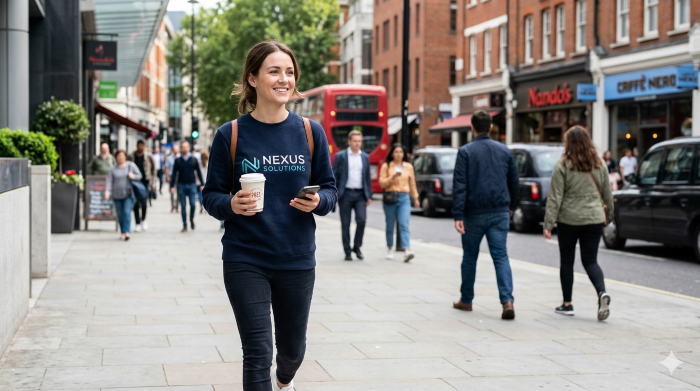
In an increasingly competitive business environment, organisations are looking beyond traditional advertising channels to strengthen brand recognition and build meaningful connections with employees, customers, and communities. While digital marketing continues to play a critical role, one of the most effective and often overlooked branding tools remains something remarkably simple: branded apparel.
Today's branded apparel is no longer limited to uniforms worn during working hours. High-quality garments have evolved into lifestyle products that employees, students, volunteers, and customers willingly wear outside the workplace. This shift has created a unique opportunity for organisations to extend their brand presence into everyday environments, from local cafés and community events to university campuses and public transport networks.
Among the most effective garments driving this trend are branded sweatshirts. Comfortable, versatile, and suitable across various industries, sweatshirts have become a practical branding asset that delivers visibility long after the workday ends.
For Australian organisations seeking sustainable and cost-effective ways to increase brand exposure, understanding how branded apparel contributes to long-term visibility has never been more important.
Modern consumers are exposed to thousands of marketing messages every day. As a result, many organisations are shifting their focus toward strategies that create authentic, repeated brand interactions rather than relying solely on paid advertising.
Brand visibility extends beyond logos and advertisements. It encompasses every touchpoint where people encounter an organisation, including employee interactions, community involvement, events, and apparel.
When employees wear branded garments outside of work, they create organic brand impressions in environments where traditional advertising often cannot reach effectively. Unlike digital advertisements that disappear after a few seconds, apparel generates repeated exposure over extended periods.
For businesses, schools, universities, sporting clubs, and non-profit organisations, this creates a valuable opportunity to build familiarity and trust through consistent visibility.
The role of branded apparel has changed significantly over the past decade.
In the past, branded clothing was often viewed as a mandatory uniform item. Today, organisations are investing in premium-quality garments designed to be worn voluntarily.
Several trends are driving this evolution:
Organisations are increasingly recognising the relationship between employee engagement and brand advocacy.
When employees receive apparel they genuinely enjoy wearing, they become natural ambassadors for the organisation. This is particularly relevant as hybrid work arrangements continue to shape Australian workplaces.
Employees who wear branded apparel outside work contribute to brand awareness while simultaneously reinforcing their connection to the organisation.
Consumers have become accustomed to higher-quality apparel across all aspects of their lives.
As a result, low-quality promotional garments are less effective than they once were. Organisations are now prioritising:
This shift has transformed branded sweatshirts from simple promotional items into valued wardrobe staples.
Environmental considerations are increasingly influencing purchasing decisions.
Many Australian organisations now seek apparel solutions that support broader sustainability goals, including:
When garments remain wearable for years rather than months, organisations reduce waste while maximising branding value.
Not all branded apparel delivers the same level of long-term visibility.
Sweatshirts occupy a unique position because they combine practicality, comfort, and broad appeal across different demographics.
Unlike event-specific shirts or seasonal merchandise, sweatshirts can be worn throughout much of the year.
In many Australian regions, they serve as ideal layering garments during cooler mornings, evenings, and winter months.
This extended usability increases the likelihood that recipients will wear them regularly.
Sweatshirts are widely accepted across various industries and age groups, including:
Because they suit both professional and casual environments, they often achieve greater usage than more specialised apparel items.
Sweatshirts offer substantial space for logos, graphics, and messaging while maintaining a professional appearance.
This allows organisations to create designs that are visually impactful without appearing overly promotional.
One of the biggest mistakes organisations make is focusing exclusively on logo placement rather than garment desirability.
The most successful branded apparel programs begin with a simple question:
Would someone wear this even if it did not represent the organisation?
If the answer is yes, the garment is more likely to generate ongoing visibility.
Comfort and durability significantly influence how frequently garments are worn.
Investing in higher-quality fabrics and professional decoration methods often produces greater long-term value than purchasing larger quantities of lower-quality garments.
Minimalist branding continues to dominate apparel trends in 2026.
Many organisations are moving away from oversized logos in favour of:
These design choices increase wearability while maintaining brand recognition.
A garment intended for university students may require a different design approach than one created for corporate employees.
Understanding the preferences of the intended audience improves adoption and increases the likelihood of long-term wear.
Brand visibility is not solely about attracting customers.
Many organisations use apparel to strengthen relationships within their communities.
Examples include:
Schools and universities frequently provide branded sweatshirts for:
These garments often remain in use for years, creating ongoing visibility throughout the community.
Volunteer apparel helps create a sense of belonging while increasing public awareness during events and community initiatives.
Branded apparel extends visibility beyond competition days, encouraging supporters and members to represent the organisation year-round.
Branded apparel performs best when integrated into a broader brand strategy.
Forward-thinking organisations are combining apparel with:
Encouraging employees to share workplace experiences on social media while wearing branded apparel can amplify organic reach.
Providing high-quality sweatshirts at conferences, exhibitions, and corporate events increases the likelihood that attendees will continue wearing them after the event concludes.
Premium apparel can serve as a valuable reward for customers, partners, or brand advocates.
Unlike disposable promotional products, useful garments continue generating visibility long after distribution.
The effectiveness of branded apparel depends heavily on garment quality, decoration methods, and production expertise.
Organisations should evaluate suppliers based on:
At Garment Printing, we regularly work with Australian businesses, schools, and organisations seeking practical apparel solutions that balance branding objectives with long-term wearability.
For organisations looking to create premium apparel programs, investing in professionally produced garments such as custom sweatshirt printing in Sydney can help maximise both visibility and garment lifespan.
Unlike many traditional marketing activities, branded apparel delivers value across multiple business objectives.
Key indicators include:
Repeated exposure contributes to stronger brand familiarity within local communities and target markets.
Well-designed apparel often supports workplace culture initiatives and improves team cohesion.
Apparel extends the lifespan of event marketing investments by creating visibility long after an event concludes.
High-quality garments can positively influence perceptions of professionalism and brand credibility.
When evaluated over the lifespan of the garment, branded apparel frequently delivers a highly competitive cost-per-impression compared to many conventional advertising channels.
Branded sweatshirts are practical, comfortable, and frequently worn outside work environments, creating ongoing exposure and increasing brand recognition in everyday settings.
High-quality sweatshirts can remain wearable for several years, providing ongoing marketing value and reducing replacement costs.
Yes. Modern sweatshirt styles and decoration techniques allow organisations to create professional garments that align with corporate branding standards.
Corporate businesses, educational institutions, sporting organisations, trade industries, community groups, and event organisers commonly benefit from branded sweatshirt programs.
Focus on quality, comfort, modern design, and audience preferences. Employees are more likely to wear garments they genuinely enjoy wearing.
Yes. Many suppliers now offer garments made from organic cotton, recycled fibres, and ethically sourced materials to support sustainability initiatives.
As organisations seek more authentic and cost-effective ways to strengthen brand recognition, branded apparel continues to prove its value beyond traditional marketing channels. Premium sweatshirts in particular offer a unique combination of practicality, comfort, and long-term visibility that few promotional products can match.
The most successful apparel programs are not built around logos alone. They are built around creating garments that people genuinely want to wear. When organisations prioritise quality, thoughtful design, and audience relevance, branded sweatshirts become more than clothing—they become an extension of the brand itself.
For Australian businesses, schools, universities, and community organisations, investing in well-designed branded apparel represents an opportunity to increase visibility, strengthen culture, and create lasting connections wherever people choose to wear it.


