English
 Arabic
 French
 Spanish
 Portuguese
 Deutsch
 Turkish
 Dutch
Dutch
 Italiano
 Russian
 Romaian
 Portuguese (Brazil)
 Greek
Greek

Wind Turbine Pitch System Market Analysis by Size, Share, Growth, Trends and Forecast (2024–2032) | UnivDatos
Other |
2025-04-04 11:34:43
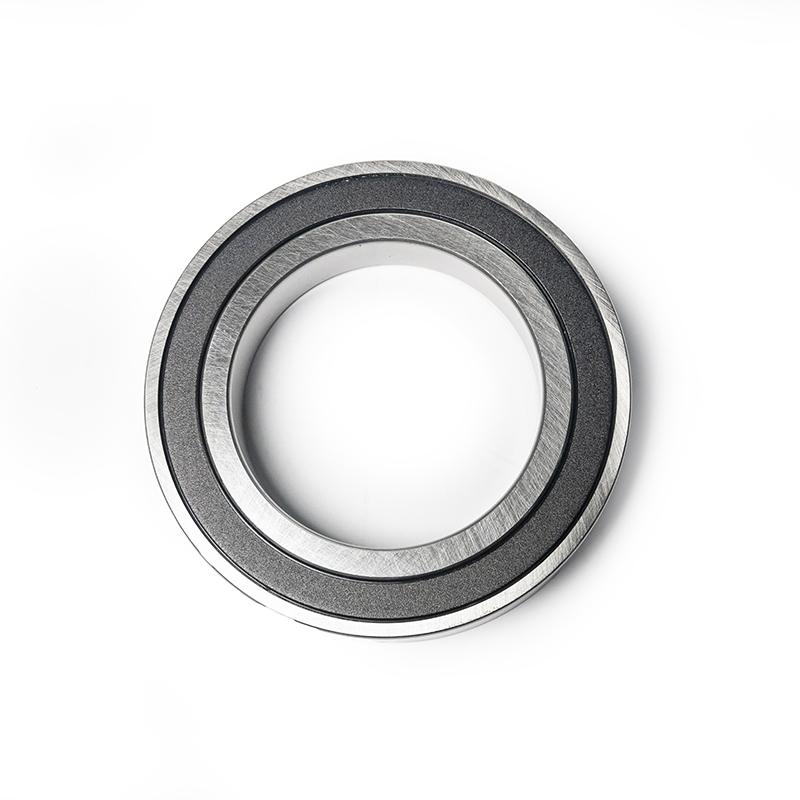
In today’s fast-paced world of industrial innovation and mechanical engineering, angular contact ball bearing have become a cornerstone component across multiple industries. Whether it’s aerospace, robotics, medical equipment, or heavy-duty machinery, these highly specialized bearings are designed to manage both radial and axial loads efficiently—setting them apart from conventional bearing types.
An angular contact ball bearing is uniquely engineered to handle loads coming from both radial and axial directions. Unlike standard bearings, the raceways in angular contact designs are positioned at an angle to the bearing axis. This geometry allows the bearing to accommodate combined loads (simultaneously acting radial and thrust loads) with remarkable stability and precision.
Depending on the angle of contact, these bearings can be customized for different applications. A higher contact angle (like 40°) is more suitable for heavy axial loads, while a lower angle (around 15° or 25°) favors high-speed performance and moderate axial loads.
1. Dual Load Support:
The primary advantage lies in the ability to support both axial and radial loads simultaneously, making them ideal for high-speed and high-precision environments.
2. High Rotational Accuracy:
Thanks to their design, angular contact ball bearings offer reduced friction and superior alignment under load, providing smoother and more accurate rotation—a key requirement in CNC machinery and automotive gearboxes.
3. Versatility in Design:
These bearings are available in single-row, double-row, and paired configurations. Single-row types must be used in sets or pairs to balance the load, while double-row bearings can accommodate loads in both directions, enhancing their structural strength.
4. Long Service Life:
Made with premium materials like chrome steel or ceramic hybrids, angular contact ball bearings are built to resist wear and tear, ensuring longer operational life with less downtime.
Due to their remarkable characteristics, angular contact ball bearings are extensively used in:
High-speed spindles and motors
Precision pumps
Automotive transmissions and gearboxes
Medical devices such as dental drills
Aerospace mechanisms and turbine engines
In robotic systems, their ability to maintain accuracy even under fluctuating loads helps keep operations stable. Likewise, in the automotive world, they’re essential for applications where both precision and strength are needed in confined spaces.
When selecting an angular contact ball bearing for your application, several factors must be considered:
Contact angle (higher for more axial load)
Load capacity (depends on material and size)
Speed rating (crucial for high-speed operations)
Seal type (open, shielded, or sealed depending on environment)
Proper selection and lubrication are critical to maximizing performance and ensuring the longevity of the bearing under various operating conditions.
As mechanical systems become more advanced and performance-driven, the demand for high-precision components like angular contact ball bearing continues to rise. Their ability to maintain stability, accuracy, and load management under extreme conditions makes them a reliable choice for engineers and manufacturers around the globe.