English
 Arabic
 French
 Spanish
 Portuguese
 Deutsch
 Turkish
 Dutch
Dutch
 Italiano
 Russian
 Romaian
 Portuguese (Brazil)
 Greek
Greek

Space Tourism Market Analysis, Trends and Growth Report (2024-2032) | UnivDatos
Other |
2025-06-10 04:51:10
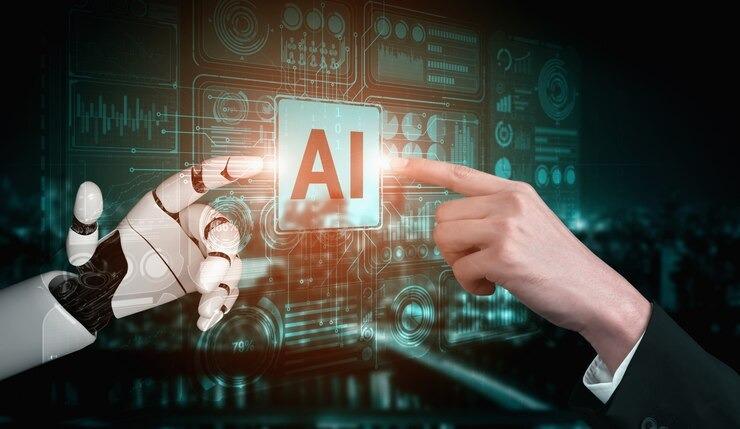
As AI services become more deeply embedded in our daily lives—from customer service bots to autonomous vehicles—the question isn't just how effective AI can be, but how ethical it is. The moral implications of AI have moved to the forefront of discussions among developers, policymakers, and businesses alike.
Whether AI automation services are assisting with hiring decisions or diagnosing patients, its deployment raises significant concerns about fairness, accountability, and human rights. This article explores the key ethical considerations and the responsibility that comes with designing and using AI.
AI systems are now capable of performing tasks that were once exclusive to human judgment. With this power comes a new set of challenges. Decisions made by AI aren't inherently moral or immoral—they reflect the intentions and biases of those who build and train them.
Here’s where the moral implications of AI come into play. When AI acts unfairly, makes biased decisions, or operates without transparency, who is held accountable?
AI systems can unintentionally learn and replicate biases present in the data they’re trained on. For example, an AI used in recruitment might prioritize resumes from certain demographics if past hiring data was biased.
This raises questions about AI technology ethics and how to ensure fairness in decision-making. Solutions include using diverse training data, conducting fairness audits, and enforcing anti-discrimination policies in AI development.
With facial recognition, behavior tracking, and data profiling, AI tools can collect and process sensitive personal information. This intrusion into privacy is one of the most debated moral implications of AI.
To protect individuals, organizations must adopt privacy-first frameworks and comply with regulations like GDPR. Consent, transparency, and control over personal data must be core components of AI systems.
AI automation has the potential to replace millions of jobs, especially those involving repetitive or routine tasks. While some argue this allows humans to focus on more creative roles, others fear widespread unemployment and economic inequality.
Addressing this ethical dilemma requires investment in workforce retraining and support systems to help workers transition to new roles—a principle tied to responsible AI use.
To manage the moral implications of AI, developers and businesses need to integrate ethics into every phase of AI development and deployment.
Transparency: Make AI decisions understandable to users.
Accountability: Assign clear responsibility for AI outcomes.
Fairness: Ensure AI systems are free from unjust biases.
Inclusivity: Design AI that serves diverse populations.
Oversight: Include human review in critical AI functions.
Ethical frameworks such as those proposed by organizations like IEEE and the EU's AI Act offer valuable guidelines for businesses delivering AI automation services.
Responsible AI use goes beyond avoiding harm—it involves using AI to actively promote social good. For example, AI can be used to detect fraud, improve healthcare outcomes, and support education in underserved regions.
Aligning AI with ethical principles not only reduces risks but also enhances trust, brand reputation, and long-term success. As more consumers become aware of AI’s impact, ethical use will become a competitive differentiator.
The moral implications of AI are not hypothetical—they are real, evolving, and increasingly urgent. As AI continues to transform industries, the need for ethical oversight and responsible AI use becomes unavoidable.
To recap:
AI automation services must be built on a foundation of transparency, fairness, and privacy.
Ethical challenges such as bias, surveillance, and job displacement must be addressed proactively.
Businesses and developers have a duty to uphold the AI technology ethics that safeguard human values.